The bottleneck moved
The week after Agile on the Beach was an odd one. One day I was supporting our CPO with the board pack, pulling together the engineering story: six months of delivery, tidied into charts. Another I took off to spend at my friends’ company, helping them work out how to adopt AI, with the conversations from the conference still turning over in my head. Conferences and time with other teams are always time well spent: new things to try, new perspectives and a step away from the day to day.
The board pack told one story. Sell With Us rebuilt in 7 days, where the previous iteration took 3 months. A new homepage in 2 weeks instead of 4 months. Our product listing pages in 3 weeks instead of 5 months. Median cycle time down from 19 hours to under 5.
But sitting with my friends’ team, I noticed something. We did talk about tools, and which models would suit the situation they’re in. But for every minute we spent on tooling, we spent ten on the approach. We talked about iterating and compounding. About building a system that would let them get more out of AI safely, with the models themselves only a small part of it. Between those two days, a clearer picture of our six months took shape.
The obvious reading of those numbers is “AI made us fast”. The more interesting question is what got harder.
Constraints moved
For most of my career, the constraint on delivery was writing the code. Everything in how we organised teams, planned work and made promises to the business was shaped around that one fact.
Over the last six months, for us, that constraint largely dissolved. And constraints never just disappear. They move. Ours moved from the keyboard to the people sitting at it. To the clarity of our specs, the quality of our delegation, and the sharpness of our judgement about what good looks like.
In my last post I wrote about the framework we built to give the team human guardrails for AI: a shared language, clear expectations, room to commit. This is the next chapter. We committed, the speed arrived, and here’s where the bottleneck showed up.
Clarity became the highest-leverage work
A vague spec used to buy you a slow sprint. Painful, but survivable, because the slowness gave everyone time to notice the gaps.
Now a vague spec buys you a fast, confident, wrong implementation. AI doesn’t fix ambiguity. It scales it. The single biggest predictor of whether we could trust an agent with a task turned out to be nothing to do with the agent. It was the quality of the spec and the plan we generated with it. Writing those well, and working through them in plan mode before an agent touches the code, is now some of the highest-leverage work in the team.
Delegation became a skill, and taste is most of it
The habit that changed everything was simple to say and hard to learn: delegate to an agent the way you’d delegate to a person. Scope the task. Define done. Calibrate how much trust it has earned. Verify the result. Autonomy is a per-task switch, not a rank you award the tooling and forget about.
And underneath that sits taste, which I’ve come to think of as the real skill of this AI phase/paradigm. Which model suits this task, and at what cost? When do you right-size down to something cheap and fast because the job doesn’t deserve the expensive one? When do you cut and run on a session that’s gone sideways, and when do you throw the whole thing away and start again? None of that is in a manual. It’s experience, built one judgement call at a time, and it’s what lets a small team do a lot.
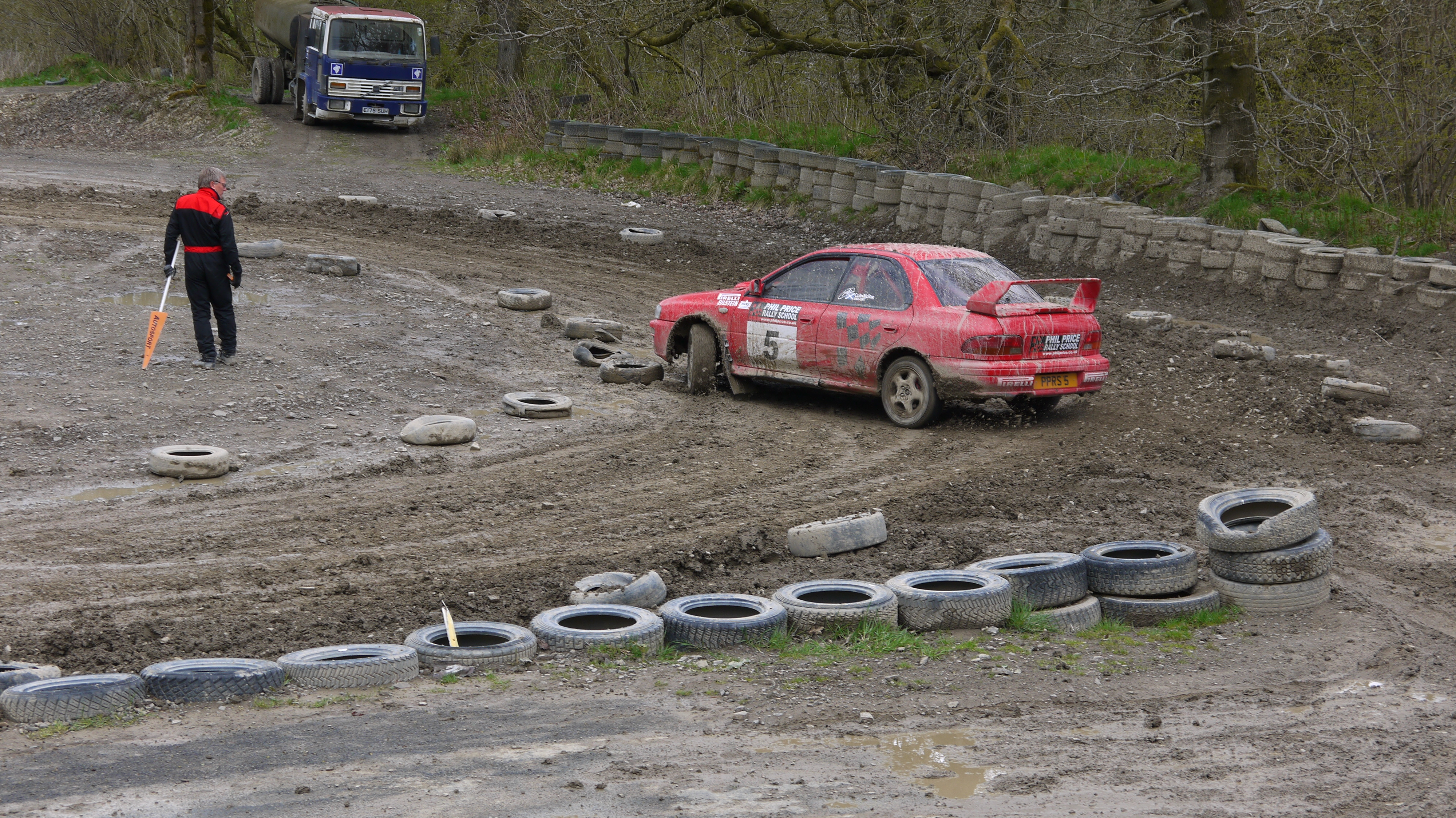
Rallying is the picture I keep coming back to. The co-driver never touches the wheel. Yet the precision of the pace notes decides whether the driver can commit flat out over a blind crest or has to lift and guess. Vague notes, cautious driving. Precise notes, total commitment. And that trust isn’t granted at the start of the season. It’s earned stage by stage, note by note. That’s what working with agents actually feels like.
The interesting number is the small one
Our lines of code went up this half. On its own, that number is noise. Anyone can generate code now. And, AI can be verbose…
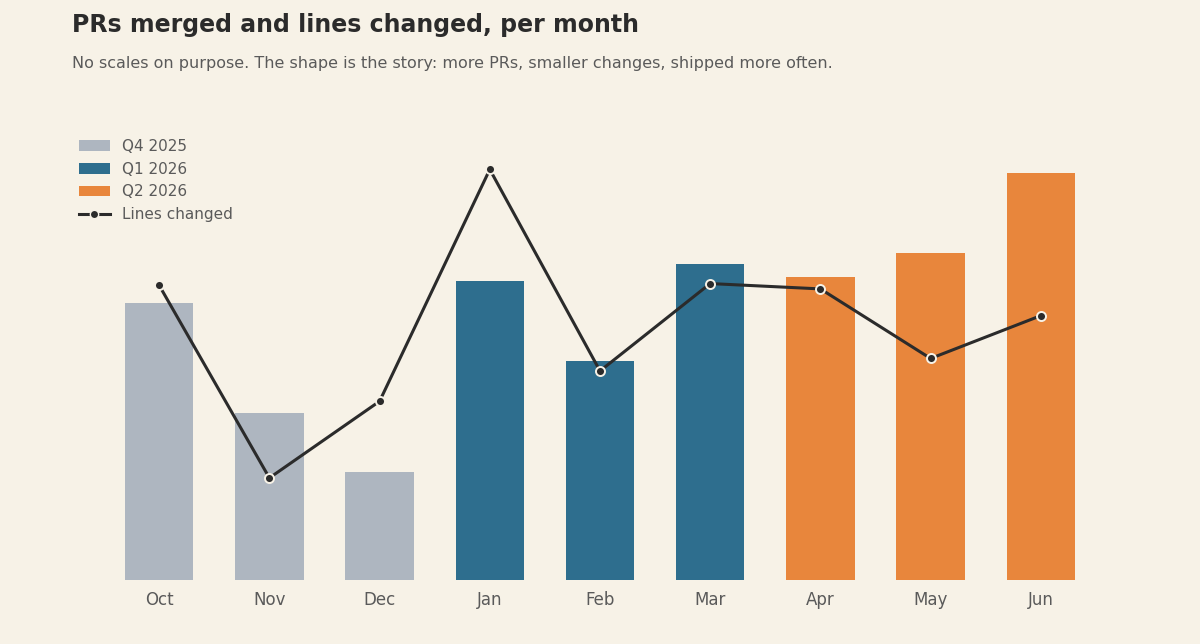
The signal is the relationship underneath it: lines per pull request falling while the number of pull requests rises. Smaller changes, shipped more often, each one easier to review and safer to release. The business isn’t getting more code. It’s getting more, faster, with less risk attached to any single release.
Ownership didn’t move
We ship bugs. Some of them were written by an agent. There is no asterisk on those, no separate category called “AI bugs” that belongs to nobody. If we shipped it, we own it.
What has changed is what happens next. Every issue becomes a systemic fix: a rule updated, a skill sharpened, a check added, a process adjusted so the same mistake can’t happen the same way twice. The compounding loop we built into the framework is doing exactly what it was designed to do. More gets caught at or before the PR, less reaches production, and every release makes the next one a little safer. Quality stopped being a claim and became a system.
Where the bottleneck moves next
The bottleneck keeps climbing. It started at the keyboard. Then it moved to the task: specs, delegation, taste. Now, six months in, it has reached strategy.
Kicking off the second half of the year, the work that needs the most attention from me isn’t tooling. It’s our tech vision and target architecture. Because I’m increasingly convinced the winning strategy will never be one model. It will be the system that lets you use all of them, and a system without direction just accelerates in whatever direction it happens to be pointing.
The start has already been made. The sleeper train to a workshop in the office gave me something thinking space. Enough to write this piece, and to sketch the first draft of a new tech vision and strategy. Deliberately a first draft. Like the framework before it, it will only work if we evolve it together as a team.
Six months ago, the constraint on our delivery was how fast we could produce working code. It isn’t any more. I’m curious where the bottleneck has moved in your organisation, and whether you saw it coming before it arrived.